During the 1920s and 1930s, the writer Gong Beiyu (宫白羽), also known by the pen name Baiyu, helped popularize one of the most famous fictionalized accounts of Yang Luchan’s life: Taiji Yang Shenming Touquan, 太极杨舍命偷拳, which can be translated as “How Yang Risked His Life to Steal the Art of Taiji”.
Although the work clearly belongs to the popular martial arts fiction genre, it had an enormous influence on the imagination of later generations. The story of the so-called “stolen fist”, touquan, became so famous that over time it was often repeated as though it were an authentic historical account. Modern Chinese literary sources describe the work as one of Gong Beiyu’s important texts and summarize precisely this plot: Yang Luchan travels to Chenjiagou to learn the art, is initially rejected, and is eventually forced to resort to a stratagem in order to gain access to the teaching.
According to the most widely known version, Yang Luchan secretly entered Chen Village disguised as a beggar – in some versions a poor servant, mute or even crippled – and “stole” the art of Taiji by eavesdropping on the teachings of Chen Changxing. Once discovered, he was ultimately accepted as a disciple either out of pity on the part of the Master or, in other versions, because of his extraordinary abilities.
These are compelling stories, perhaps even cinematic, but they do not reflect the historical reality and must therefore be approached with caution. They belong more to the realm of legend than documented history. Such tales blend oral traditions, literary imagination, narrative necessity, and above all: rivalry between lineages.
Their power lies not in historical accuracy, but in their ability to transform Yang Luchan into a novelistic figure – or even a thief of skill: poor, stubborn, marginalized, yet capable of overcoming social and familial barriers in order to gain access to secret knowledge.
Martial Myth and the Construction of an Imaginary
As anticipated, the success of Gong Beiyu’s narrative eventually gave rise to a proliferation of derivative stories. Some sought to discredit Yang Luchan by portraying him as someone who had “stolen” another family’s art. Others, on the contrary, transformed him into an almost superhuman mythical figure, destined from the very beginning to reveal the power of Taijiquan to the world.
Even today, in many Taijiquan schools – especially in the West – versions of these stories continue to circulate as though they were historically reliable. Among the most common is the idea that Yang Luchan “simplified” Taijiquan in order to make it accessible to a broader audience, or the claim that he was merely a mediocre practitioner of Chen style who failed to fully grasp its principles and therefore taught only a reduced version of the art.
Once again, none of this aligns with the actual chronology of events. There is no solid historical evidence supporting such claims. They appear instead to be the product of modern dynamics: rivalry between styles, identity-building strategies, defense of lineages, commercial competition, and retrospective constructions of authority.
In truth, this is nothing new. Human history – and therefore the history of Chinese martial arts as well – has always been shaped by genealogical narratives, claims of authenticity, foundation myths, and stories constructed either to legitimize a school or to discredit it.
What Do the Earliest Sources Say?
When discussing Yang Luchan – founder of what is now known as Yang-style Taijiquan – the primary problem is the scarcity of contemporary sources. One of the most important relatively early testimonies appears in Li Yiyu’s Taijiquan xiaoxu from 1881, part of the trilogy concerning the first three ancient Taijiquan Classics. In that text, it is briefly stated that Yang learned the art from Chen Changxing, later returned to his hometown, and practiced together with Wu Yuxiang.
The text is extremely restrained. It says nothing about stealing the art, secretly infiltrating the Chen family residence, or serving directly under the Emperor of China.
This detail is crucial. The closer a source is to Yang Luchan’s lifetime, the fewer sensational or degrading details it contains. The farther away sources become in time, the more his biography fills with dramatic episodes, elaborate genealogies, memorable duels, and morally uplifting or defamatory narratives.
As for the most important Chinese source concerning Yang Luchan’s relationship with Beijing, this is Xu Yusheng, who in 1921 published Taijiquan shi tujie, 太極拳勢圖解, “Illustrated Explanation of Taijiquan Postures”. Xu Yusheng had studied under Yang Jianhou, Yang Luchan’s own son, and therefore wrote from a position close to the Yang tradition, although by then nearly fifty years had passed since the founder’s death.
Xu recounts that after studying with Chen Changxing, Yang Luchan returned to his hometown and attempted to teach the art to several fellow villagers. At that time, Xu writes, the art was also initially known as ruan quan, “soft fist”, or hua quan, “neutralizing fist”, because of its ability to evade and control hard force.
Yang later traveled to Beijing, where he was hosted in various aristocratic residences, and many princes, nobles, and members of the Qing aristocracy studied under him. Xu further states that Yang became a martial arts instructor for the qiying, namely the Manchu Banner camps or divisions.
This is a highly precise formulation, very different from the vague statement that “Yang taught in the Forbidden City as the Emperor’s bodyguard”.
Did Yang Luchan Really Teach Inside the Forbidden City?
Most likely not, at least not in the literal and popular sense in which this phrase is often understood.
Saying that Yang Luchan “taught at the imperial court” can only be considered acceptable if one clarifies what is meant by “court”. There is no solid evidence that Yang stood beside the Emperor, nor that he regularly taught inside the Forbidden City itself. A more accurate formulation would be this: Yang Luchan taught in Beijing within Qing aristocratic circles, in noble residences, and in Manchu military environments connected to the Banner divisions.
The term used by Xu Yusheng, fu di, 府邸, refers to noble residences or aristocratic estates, not necessarily to the imperial palace. Likewise, the term qiying, 旗營, refers to the Manchu Banner divisions, which formed a fundamental military and social structure of the Qing dynasty. It does not automatically mean the “imperial guard” in the narrow sense of an elite corps directly responsible for protecting the Emperor.
For this reason, it is better to avoid describing Yang Luchan as an “imperial guard”. His most historically plausible role was that of a professional martial arts instructor: a teacher invited to instruct within aristocratic and military settings, likely training officials, Manchu nobles, members of princely households, attendants, and men belonging to the Banner divisions.
Among the students remembered in this context were Wan Chun, Ling Shan, and Wu Quanyou*. Xu Yusheng states that, when Yang was serving as an instructor in the Banner troops, these three received his transmission: Wan Chun was known for his hard strength, Ling Shan for his ability to throw opponents, and Wu Quanyou for his soft transformation. The latter is especially important for the later history of Taijiquan, because from his line of descent the Wu style would later emerge, through his son and student: Wu Jianquan.
*Note: it should be clarified that Wu Quanyou, although formally a student of Yang Luchan, was in fact guided and instructed by Luchan’s eldest son, Yang Banhou.
Yang Luchan and the Public Emergence of Taijiquan
To understand why Yang Luchan became such a central figure in the history of Taijiquan, however, one must shift attention away from myth and toward concrete history.
Before Yang’s public emergence in Beijing, the art we now call Taijiquan had not yet stabilized as a major public and recognizable denomination. Sources and traditions refer to it by different names, such as Shisanshi, “Thirteen Postures” or “Thirteen Dynamics”, Chang Quan, “Long Fist”, or, as already mentioned, ruan quan, “soft fist”, and hua quan, “neutralizing fist”.
The philosophical principle of Taiji – namely the dynamic interplay of yin and yang first articulated in the Yijing – was naturally already well known within educated Chinese culture. What had not yet occurred was its transformation into a martial designation associated with a codified style tied to a recognizable lineage.
In this process, Beijing played a decisive role. The Qing capital was a complex environment composed of Manchu aristocracy, officials, military officers, scholars, weapons instructors, palace attendants, noble residences, militias, and Banner divisions. Yang Luchan brought his art into this world not as a marginal villager – as some later stories suggest in order to diminish his status – but as an instructor capable of attracting the attention of men socially far above him.
His fame was also linked to his reputation as a fighter. Yang tradition remembers him as Yang Wudi, “Yang the Invincible”, though caution is again necessary: we possess no neutral records of duels nor official documentation of his victories.
What can be stated more rigorously is that already in Republican-era sources and lineage memories, Yang appears as a master whose martial effectiveness was regarded as absolutely extraordinary. Whether genuine or progressively amplified over time, this reputation played a decisive role in the public success of what later came to be called Taijiquan.
If Taijiquan is now one of the best-known internal martial arts in the world, this is due largely to the process initiated by the early generations of the Yang family and later developed further by the Wu (Hao) and Wu lineages. These circles did not merely transmit sequences of movements: they produced, preserved, commented upon, and disseminated texts, principles, terminology, and theoretical models.
In other words, they helped transform a fragmented martial practice transmitted orally – and physically – into a highly articulated and enduring cultural tradition.
Without this process, much internal knowledge would likely have been lost, as happened to many styles that are today presented as “ancient” through genealogies constructed retrospectively in order to confer prestige and legitimacy upon traditions that were, in reality, invented relatively recently.
Uncertain Origins and the Need for Historical Rigor
So what is the “true” story of Yang Luchan and the origins of Taijiquan?
The most honest answer is that we do not know with certainty. What we can say, however, is that modern Taijiquan emerges publicly through the Yang family and develops thanks to practitioners from multiple backgrounds and different martial traditions.
There are few ancient sources and many later theories, often contradictory and heavily biased toward the idea of a linear history of Taijiquan. Among these is the well-known reconstruction proposed by Tang Hao, according to which Taijiquan originated in Chen Village in connection with Chen Wangting and the martial tradition of the Chen family.
This thesis has exerted enormous influence on modern historiography, but it too cannot be treated as an unquestionable and definitive demonstration. It should be remembered that Tang Hao, during the 1930s, formulated his reconstruction in the context of an open polemic against traditional genealogies and narratives. As is well known among scholars of the field, Tang Hao sought to dismantle traditional Chinese culture. Consequently, according to his perspective, any history tied to tradition had to undergo radical revision.
In reality, profound practices such as Taijiquan reveal a recurring truth: they never emerge from a single isolated creative act descending from some divine source. They are always the result of a slow process of codification carried forward by generations who refine, select, transform, and transmit preexisting knowledge.
Searching for a single definitive “birth moment” is therefore a methodological mistake. The more interesting question is not “Who invented Taijiquan?”, but rather: “Through which people, environments, texts, and practices did Taijiquan become what we recognize today?”
From this perspective, Yang Luchan remains a central figure. Not because he “invented” the art we now call Taijiquan, but because he was one of the principal mediators between local martial knowledge and its public affirmation within the capital of the empire.
A Testimony Attributed to Weng Tonghe
A famous testimony is attributed to Weng Tonghe (1830–1904), an important scholar and tutor to the Guangxu Emperor. According to tradition, after witnessing Yang Luchan in action, Weng wrote:
楊進退閃躲神速,虛實莫測,身似猿猴,手如運球,或太極之渾圓一體
“Yang is astonishingly swift in advancing, retreating, evading, and changing direction; his transitions between fullness and emptiness are impossible to predict. His body resembles that of an agile monkey, his hands like moving spheres: perhaps this is the rounded and undivided unity of Taiji”.
This statement is highly significant because it conveys an image consistent with the principles still associated today with classical Taijiquan: the alternation of empty and full, mobility, roundness, continuity, and the ability to neutralize and transform.
Even here, however, caution is necessary. Some modern scholars have questioned the authenticity of the famous attribution to Weng Tonghe and of the calligraphic couplet often associated with Yang Luchan. It is therefore inappropriate to present it as absolute historical proof. It is more accurate to regard it as a highly influential traditional testimony that illustrates how Yang was perceived within the educated and aristocratic circles connected to the capital.
A Significant Anecdote
A famous anecdote recounts that Yang Luchan was invited into the home of a wealthy Beijing notable named Chang or Zhang, who had become curious about his reputation. Struck by Yang’s small physique, the host treated him dismissively, offering him a modest dinner and openly questioning the effectiveness of his “soft” art.
In response to the provocation, Yang supposedly stated that there were only three kinds of men he could not defeat: men made of bronze, iron, or wood.
When Chang ordered his best bodyguard to attack him, Yang neutralized the assault by yielding and adhering to the opponent’s force, then launched the man across the courtyard.
Impressed, Chang reportedly offered Yang a large reward to enter his service. Yang declined and departed.
Naturally, this story too belongs to the realm of martial anecdote. It should not be read as a judicial record of a verifiable historical event. Yet its symbolic value is powerful: it illustrates the reversal of ordinary notions of strength. The small and apparently weak man defeats the larger fighter not by opposing hardness with hardness, but through structure, timing, rooting, yielding, and the ability to transform incoming force.
This is precisely the heart of Taijiquan: not colliding head-on, not resisting rigidly, and not confusing power with muscular contraction. Authentic strength arises from the correct relationship between body, intention, balance, and change.
Conclusion
Yang Luchan does not need to be transformed into a thief of secrets, a servant hiding behind a door, an imperial guard of the Forbidden City, or an invincible hero from a martial arts novel.
His historical greatness is already more than sufficient.
He was a practitioner of extraordinary ability, trained within a martial environment that is now difficult to reconstruct with certainty; he brought his art to Beijing; he taught in Qing aristocratic residences; he was remembered as an instructor of the Manchu Banner divisions; and he transmitted a method that, through his sons, students, and connected lineages, would profoundly transform the history of Chinese martial arts and beyond.
The myth of the “stolen fist” belongs to literature. History – far more interestingly – reveals instead a man capable of moving between different worlds: the village, the capital, the Manchu aristocracy, military environments, literati culture, and family transmission.
And it is precisely in this passage, more than in any legend, that Yang Luchan becomes a decisive and central figure: not merely a Master of the past, but one of the principal architects behind the emergence of Taijiquan itself.
Study, Transmission, and Practice Today
Distinguishing between myth and history does not diminish tradition; it strengthens it. In Taijiquan, genuine understanding does not arise from legends, but from the study of principles and constant practice.
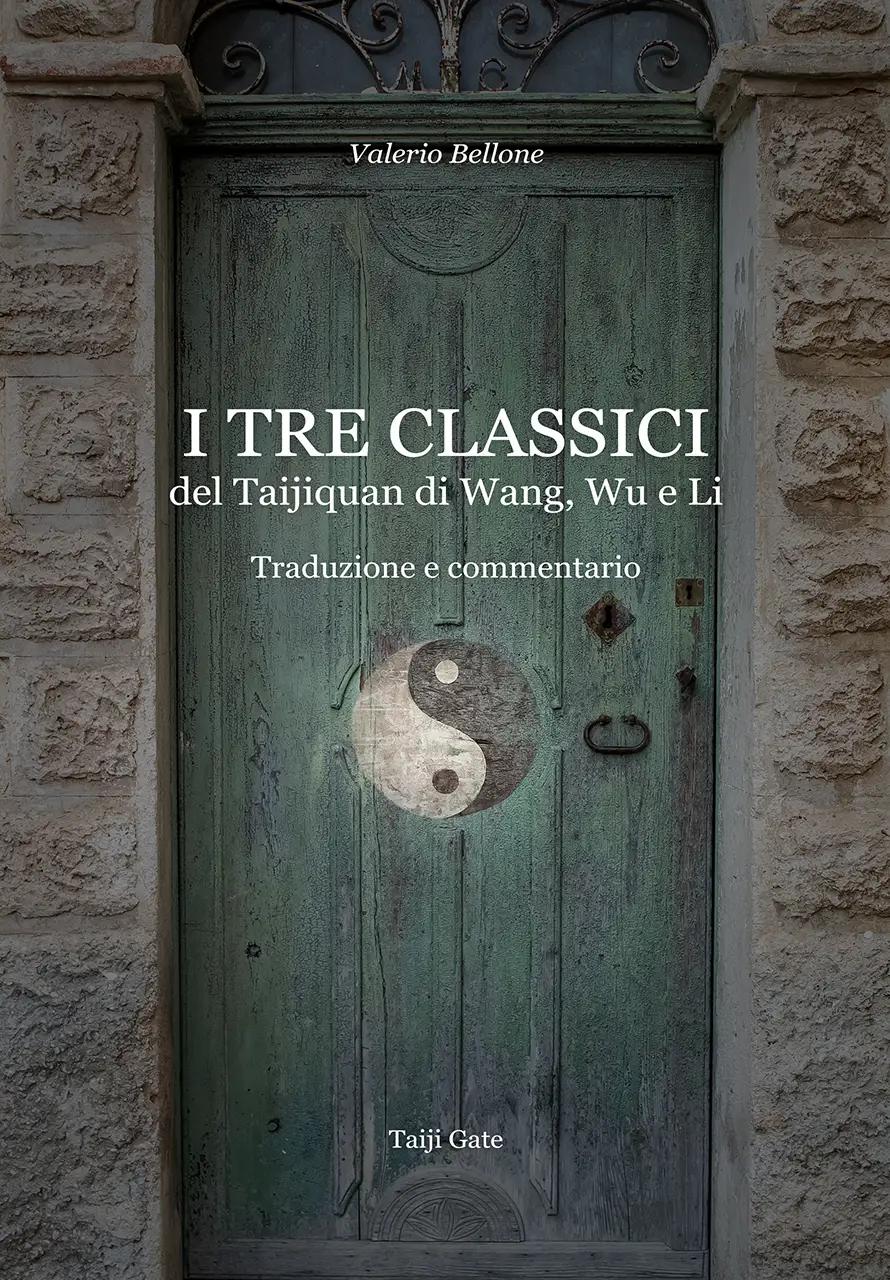
For those wishing to deepen their understanding of the theoretical framework that made the transmission of this art possible across generations, the study of the classical texts is essential. A central reference is The Three Taijiquan Classics of Wang, Wu, and Li, which gathers and comments upon the manuscripts that form the foundation of the entire internal tradition.
Likewise, guided practice – both through in-person classes and online programs – remains the essential means through which theoretical knowledge becomes direct experience, according to the teaching approach carried forward by Taiji Gate.